Simon Segars expects Arm's partners to ship 50 billion chips in the next two years.
Image Credit: Dean Takahashi
Semiconductor and software design company Arm is doubling down on edge AI hardware, a market that’s expected to be worth $1.15 billion by 2023. It today announced two new AI-capable processors — the Arm Cortex-M55 and Ethos-U55, a neural processing unit (NPU) — designed for internet of things (IoT) endpoint devices, alongside supporting software libraries, toolchains, and models. The company claims that the two chips, which are expected to arrive in market in early 2021, together will deliver an uplift of up to 480 times in machine learning performance in certain voice and vision scenarios.
“[Machine learning] processing on low-power endpoint devices is critical to realizing the full potential of AI for IoT,” wrote the company in press materials. “An extended range of advanced hardware capabilities is required to enable innovation and scale.”
The Cortex-M55, the newest member of Arm’s Cortex-M processor portfolio of cost-optimized and power-efficient microcontroller devices, delivers up to a 15 times uplift in AI performance on its own compared with previous Cortex-M generations, as well as custom instructions and configuration options. Like the Ethos-U55, it’s available in a reference design — Corstone-300 — that ships with a number of secure subsystems and a toolkit with which to build secure embedded systems.
The Cortex-M55 also has the distinction of being the first system-on-chip based on Arm’s Helium technology, an extension of the Armv8.1-M architecture that is optimized for low-power silicon and adds over 150 new scalar and vector instructions. The integer Helium enables efficient compute of 8-bit, 16-bit, and 32-bit fixed-point data, the last two of which are widely used in traditional signal processing applications such as audio processing. As for the 8-bit fixed-point format, it’s common in machine learning processing such as neural network computation and image processing, complementing floating point data types including single-precision floats (32-bit) and half-precision floats (16-bit).
According to Arm, Helium enables a performance boost of up to 5 times for digital signal processing and 15 times for machine learning with the Cortex-M55. It additionally allows for advanced memory interfaces to provide speedy access to machine learning data, and it builds in Arm’s TrustZone systemwide embedded security technology.
Ethos-U55 — which is intended to be paired with a Cortex-M processor like the Cortex-M55, Cortex-M33, Cortex-M7, or Cortex-M4 — packs between 32 and 256 configurable compute units capable of achieving up to 32 times machine learning performance uplift compared with the Cortex-M55. Pitted against the Cortex-M7, Arm claims that the Ethos-U55 and Cortex-M55 are up to 50 times faster in terms of speed to inference and up to 25 more energy efficient in tasks like voice activity detection, noise cancellation, two-mic beamforming, echo cancellation, equalizing, mixing, keyword spotting, and automatic speech recognition.
On the software side, both the Ethos-U55 and Cortex-M55 benefit from a unified software development flow that folds embedded code, digital signal processor code, and AI model code into one. Importantly, it plays nicely with popular machine learning frameworks like Google’s TensorFlow and Facebook’s PyTorch, plus Arm’s own solutions.
The unveiling of the Ethos-U55 comes after Arm took the wraps off of the Ethos-N57 and Ethos-N37, which both feature voice recognition and always-on capabilities. (Ethos, which launched recently, is a product suite focused on solving complex AI compute challenges with sensitivity to battery life and cost.) Around the same time in October, the company revealed its roadmap for Mbed OS, the embedded software operating system that’s meant to serve as a foundation for smart and connected devices.
Madikeri is a hill town in southern India. Framed by the Western Ghats mountain range, it’s known for the Raja’s Seat, a simple monument overlooking forests and rice paddies. In the center, the 17th-century Madikeri Fort features 2 stone elephants at the entrance. Nearby, the domed Omkareshwar Temple is dedicated to the Hindu deity Shiva. To the northwest, cascading Abbey Falls is surrounded by spice plantations.
When to visit
Madikeri has a tropical climate. Temperatures are warm year-round, and monsoon rainfall can be heavy Jun–Aug. The relatively dry, mild months of Dec–Apr are a common time to visit. The 10-day Madikeri Dasara festival (dates vary) features colorful processions and temple celebrations throughout the town.
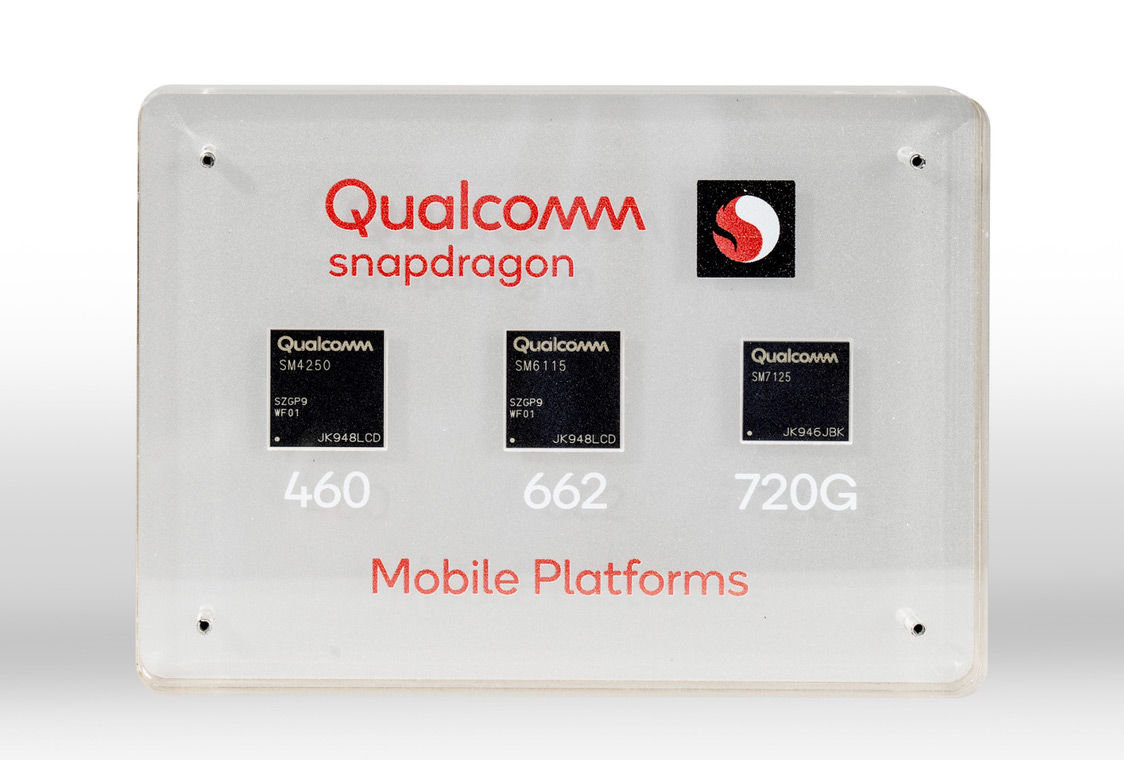
Qualcomm introduces the Snapdragon 720G, 662, and 460 aimed at 4G markets, becomes the first to support ISRO's NavIC GPS constellation
Qualcomm has announced three new Snapdragon Mobile Platforms for budget users. (Image Source: Qualcomm)
Qualcomm has revealed three new SoCs for upcoming budget smartphones — the Snapdragon 720G, Snapdragon 662, and the Snapdragon 460. These 4G SoCs come with support for key Wi-Fi 6 features, support for ISRO's NavIC GPS satellite constellation, and improved AI capabilities. The new SoCs will be available for OEMs worldwide starting with Snapdragon 720G in Q1 2020.
Qualcomm has launched three new Mobile Platforms targeting budget smartphone users viz. the Snapdragon 720G, Snapdragon 662, and the Snapdragon 460. These SoCs offer fast 4G speeds, improved wireless connectivity via key Wi-Fi 6 features, Bluetooth 5.1 with Qualcomm FastConnect 6, and support for L1 and L5 dual-frequency GNSS. The new SoCs are also the first to support the Indian Space Research Organization's (ISRO) Navigation with Indian Constellation (NavIC) GPS constellation system.
Snapdragon 720G
The Snapdragon 720G furthers lowers the entry-point into Qualcomm's mid-range segment, which is currently helmed by the recently announced Snapdragon 765/765G. While the 765G is fabbed on the 7nm process, the 720G is a 8nm part and uses the Snapdragon X15 LTE modem. The Snapdragon X15 supports 3-carrier aggregation, 4x4 MIMO on two carriers, and 256-QAM for download speeds up to 800 Mbps.
Like the 765G, the 720G also features select Qualcomm Snapdragon Elite Gaming features. The SoC supports HDR gaming, Qualcomm aptX Adaptive, and a Spectra 350L ISP that allows for a maximum photo capture resolution of 192 MP. Other features include support for 5th generation AI Engine with Qualcomm Hexagon Tensor Accelerator and FastConnect 6200 Wi-Fi enhancements with WPA3 and Wi-Fi 6 8x8 muti-user MIMO.
Snapdragon 662
The 6-series gets an upgrade this year to the Snapdragon 662. This SoC features the Spectra 340T ISP that supports triple cameras and HEIF image capture. The 3rd generation AI Engine with Hexagon Vector Extensions (HVX) enable support for AI-based night photography, face and voice ID, and use of avatars. The Snapdragon 662 features the Snapdragon X11 LTE mode with 2-CA, 2x2 MIMO, 256-QAM, and download speeds up to 390 Mbps.
Snapdragon 460
The Snapdragon 460 looks to provide a compelling upgrade over the Snapdragon 450 with the inclusion of performance CPU cores and an updated GPU. Qualcomm says that the CPU and GPU in the Snapdragon 460 offer 70% and 60% improved performance, respectively, over the Snapdragon 450. For the first time, the 4-series is getting some AI love with the 3rd generation Qualcomm AI Engine that includes HVX and the Spectra 340 ISP. Like the Snapdragon 662, the Snapdragon 460 also features the X11 LTE modem for fast 4G connectivity.
Devices based on the Snapdragon 720G will be available in Q1 2020 with Xiaomi slated to be among the first to launch a Snapdragon 720G-powered phone. Devices powered by the Snapdragon 662 and 460 will be available towards the end of this year.